DIAGNOSTIC TEST NAVIGATOR
Point-of-Care Tool for Front-Line Healthcare Providers | Designed for the HHS LymeX Diagnostic Accelerator.
DIAGNOSTIC TEST NAVIGATOR
Point-of-Care Tool for Front-Line Healthcare Providers | Designed for the HHS LymeX Diagnostic Accelerator.
NIH PUBLISHED RESEARCH
Aucott, J., Morrison, C., Munoz, B., et al. (2009). Diagnostic challenges of early Lyme disease: Lessons from a community case series. BMC Infectious Diseases, 9. https://doi.org/10.1186/1471-2334-9-79
Branda, J. A., Strle, K., & Nigrovic, L. E., et al. (2017). Evaluation of modified 2-tiered serodiagnostic testing algorithms for early Lyme disease. Clinical Infectious Diseases, 64(8), 1074–1080. https://doi.org/10.1093/cid/cix043
Chou, E., Minor, A., & Cady, N. C. (2021). Quantitative multiplexed strategies for human Lyme disease serological testing. Experimental Biology and Medicine, 246(12), 1388–1399. https://doi.org/10.1177/15353702211003496
van Dop, W. A., Kersten, M.-J., de Wever, B., & Hovius, J. W. (2013). Seronegative lyme neuroborreliosis in a patient using rituximab. BMJ Case Reports, bcr2012007627. https://doi.org/10.1136/bcr-2012-007627
Fallon, B. A., Strobino, B., Reim, S., Stoner, J., & Cunningham, M. W. (2020). Anti-lysoganglioside and other anti-neuronal autoantibodies in post-treatment Lyme Disease and Erythema Migrans after repeat infection. Brain, Behavior, & Immunity - Health, 2, 100015. https://doi.org/10.1016/j.bbih.2019.100015
Hinckley, A. F., Connally, N. P., & Meek, J. I., et al. (2014). Lyme disease testing by large commercial laboratories in the United States. Clinical Infectious Diseases, 59(5), 676–681. https://doi.org/10.1093/cid/ciu397
Khan, F., Allehebi, Z., & Shabi, Y., et al. (2022). Modified two-tiered testing enzyme immunoassay algorithm for serologic diagnosis of Lyme disease. Open Forum Infectious Diseases, 9. https://doi.org/10.1093/ofid/ofac272
Magni, R., Espina, B. H., Shah, K., et al. (2015). Application of Nanotrap technology for high sensitivity measurement of urinary outer surface protein A carboxyl-terminus domain in early stage Lyme borreliosis. Journal of Translational Medicine, 13, 346. https://doi.org/10.1186/s12967-015-0701-z
Moore, A., Nelson, C., Molins, C., Mead, P., & Schriefer, M. (2016). Current guidelines, common clinical pitfalls, and future directions for laboratory diagnosis of Lyme disease, United States. Emerging Infectious Diseases, 22(7). https://doi.org/10.3201/eid2207.151694
Rebman, A. W., Crowder, L. A., Kirkpatrick, A., & Aucott, N. J. (2014). Characteristics of seroconversion and implications for diagnosis of post-treatment Lyme disease syndrome: acute and convalescent serology among a prospective cohort of early Lyme disease patients. Clinical Rheumatology, 34(3), 585-589. https://doi.org/10.1007/s10067-014-2706-z
Tijsse-Klasen, E., Pandak, N., Hengeveld, P., Takumi, K., Koopmans, M. P., & Sprong, H. (2013). Ability to cause erythema migrans differs between Borrelia burgdorferi sensu lato isolates. Parasites & Vectors, 6, 23. https://doi.org/10.1186/1756-3305-6-23
CME & MEDICAL EDUCATION
Free ACCME accredited evidence-based medical education from leading hospitals & researchers.
VectorWise CME Platform
The VectorWise CME platform is a library of accredited continuing medical education (CME) courses that teach front-line clinicians about diagnosing & treating vector-borne diseases. These courses are free to all users & are accessible to both clinicians & patients online.
The VectorWise CME Initiative focuses on vector-borne & environmental illness, utilizing a One Health framework.

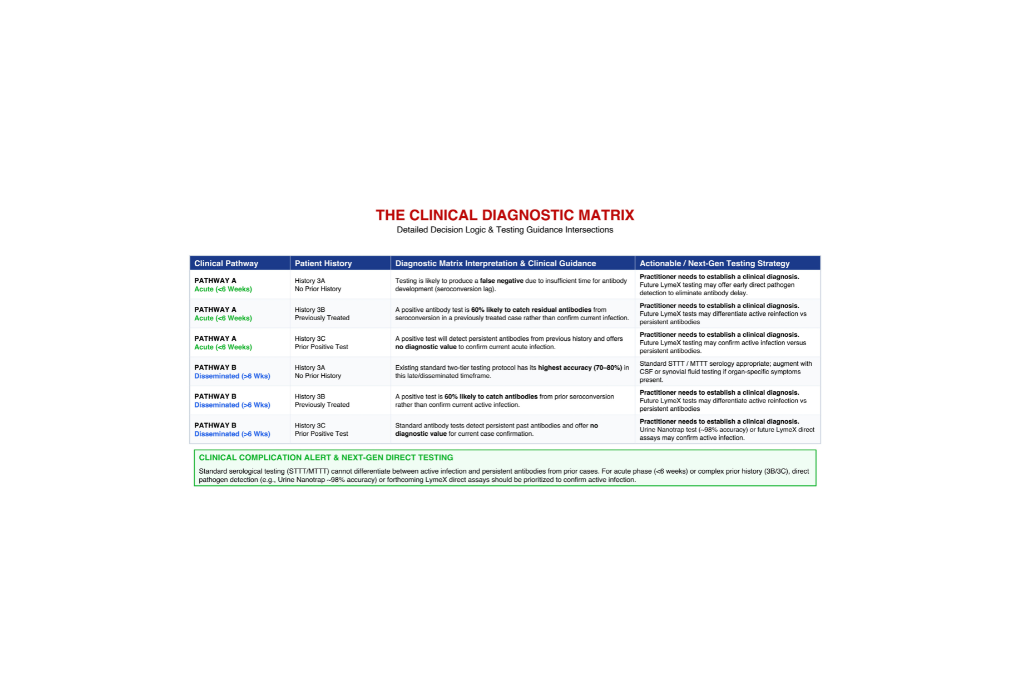
Printable Matrix & Validated Symptom Reference
Academic Tick-Borne Illness Research
PATIENT VOICES
The following are composite summaries of Lyme disease patient stories derived from two qualitative research studies conducted between 2020 and 2025 through Northern Arizona University and covered through IRB approval. Data presented here are anonymized to protect the identities of research participants, though reveal actual lived experiences related to challenges in Lyme disease diagnostics.
Emma’s path to an eventual Lyme disease diagnosis was, as she recalled, painfully fraught, complex, and long. Though she grew up in an area known to be endemic for Lyme disease, and remembers multiple tick bites and rashes as a child, her knowledge of the illness was limited. When she first started experiencing wide-ranging symptoms at 9 years old, her primary care physician dismissed them as “growing pains” after routine blood work proved inconclusive. Emma’s health further declined over the years, and she saw a total of 14 different providers before a family friend suggested the possibility of Lyme disease and recommended she see an infectious disease physician. An initial Lyme disease test showed antibodies, though without a definitive positive outcome, her infectious disease physician ruled out a Lyme disease diagnosis and referred her to another specialist. After several more years of declining health and a series of new providers, Emma consulted another infectious disease physician who ordered a two-tier diagnostic test, which came back positive for Lyme disease. From the time Emma first experienced symptoms to an eventual positive Lyme disease test, she had spent 18 years searching for answers while her symptoms, and quality of life, progressively worsened.
Illyssa was in her mid-teens when she first experienced joint pain and fatigue severe enough she was forced to leave high school and remained housebound as she passed through several providers seeking a definitive diagnosis and effective treatment. Ilyssa had no prior knowledge of Lyme disease and had no memory of having been exposed to ticks, though she spent considerable time outside as a child in a densely wooded area of the Midwest. Initial diagnoses of fibromyalgia, juvenile rheumatoid arthritis, and chronic fatigue syndrome offered temporary hope for a path forward, though as her health worsened and treatments proved ineffective, her search for answers continued. Ilyssa eventually found a physician knowledgeable in tickborne illness who questioned her previous diagnoses and recommended she take a two-tier test. Ilyssa remembers that her first three tests were negative, though recalls her physician suggesting that standard Lyme disease testing lacks appropriate sensitivity and can, in some cases, produce false negatives. Her physician encouraged Ilyssa to retest, which led to a positive result confirming a Lyme disease diagnosis that supported her physician’s initial clinical assessment.
Phoebe had led a highly active life until a tick bite after a hike led to a dramatic change in her ability to function as she once had. Following the onset of symptoms, her primary care provider ran standard bloodwork though, with little definitive insights into what was causing progressive neurological decline, referred Phoebe to a neurologist who raised the possibility of Multiple Sclerosis. Though her primary care provider had been made aware of a tick bite and the appearance of symptoms not long after, Phoebe recalls that the prospect of Lyme disease had never been raised. After an inconclusive MRI, Phoebe spent considerable time researching on her own, eventually suspecting Lyme disease as the root cause of her symptoms. She returned to her primary care provider to ask for a Lyme disease test, though an initial ELISA test came back negative. Phoebe saw three more providers before retesting with one and ordering bloodwork through a specialty lab with another. At this point, Phoebe recalls a two-tier test returning positive by CDC standards for Lyme disease, though her provider at the time said he did not know how to interpret the results in light of her past negative results, and was unwilling to treat her for Lyme disease. Phoebe believes the medical uncertainty surrounding her symptoms and delay in testing and treatment has led to longstanding complications that continue to shape and limit her day-to-day life.
Scott was a lifelong resident of an area endemic for Lyme disease and knew several friends and family members who had contracted it over the years. He recalls being aware of the risks of infection and followed appropriate preventative protocols when outdoors and in areas where tick exposure was likely. After experiencing a bout of flu-like symptoms, swollen and stiff joints, and rashes during a summer spent largely outdoors, Scott suspected exposure and made an appointment with a family medicine doctor to have what he believed would be a straightforward Lyme disease test. When initial testing returned negative, and his provider decided against offering treatment, Scott felt forced to seek additional care given his belief that his symptoms were directly tied to his exposure to ticks. Scott recalls having a follow-up two-tiered test with another provider, which showed an equivocal first part result and a negative second part. This provider again suggested it was unlikely to be Lyme disease leading Scott to continue to pursue help. A third Lyme disease test with a new provider revealed a positive first result, which Scott recalls, was enough for this provider to suspect Lyme disease and offer treatment. The path to an eventual diagnosis and the initiation of treatment for Lyme disease took over a year, which Scott alleges caused significant setbacks in his recovery.
Greg, an avid outdoorsman who had cursory knowledge of Lyme disease but lived in a region where he believed Lyme disease was rare, faced an unexpectedly arduous path to an eventual Lyme disease diagnosis. Initial perplexing symptoms led him to a provider who ordered a Lyme disease test after Greg’s urging, which came back positive. Told that the result was a “false positive” given the unlikely chance of having contracted Lyme disease in his region, Greg’s provider opted not to provide treatment for Lyme disease and referred Greg to a rheumatologist. Greg recalls having let go of the possibility of Lyme disease as he believed his provider, though a later encounter with a family medicine doctor who suspected Lyme disease after her clinical assessment, led him to agree to retest. His second test revealed an additional positive result for Lyme disease, and given the constellation of symptoms he had along with his provider’s clinical review, he soon began treatment for Lyme disease. Greg believes had he not had the benefit of seeing an additional provider who was knowledgeable in tickborne illness, he may have deteriorated further.
This project was driven by the lived experiences of each team member, and the following Lyme disease patient stories belong to them.
I was living in South Florida when I developed symptoms of fatigue, joint pain, and gradually increasing neurological involvement. After eliminating other possibilities, my primary care physician suspected Lyme disease, although serological testing was equivocal, and referred me to a neurologist for a spinal tap. Despite my CSF testing positive for Lyme antibodies, the neurologist did not believe that I had neuroborreliosis and failed to provide the recommended treatment. Oral doxycycline proved ineffective for my worsening symptoms and suppressed my antibodies on numerous follow-up tests. I finally presented CDC positive Lyme serology after discontinuing the antibiotics. It was only three years later that I received IV ceftriaxone for neurological Lyme disease, which resolved a significant subset of my symptoms. However, the multiple years of disseminated infection had left me disabled from permanent damage and secondary neurological diseases that require ongoing IVIG infusions.
I grew up in a region in New York known for Lyme disease and had multiple tick bites as a child. Both of my parents had Lyme disease, though my initial onset of symptoms at 13 years old presented in distinctly different ways, which led to years of misdiagnosis and delayed treatment. Progressively worsening neurological symptoms were disabling enough that after nearly twenty years of seeking a definitive diagnosis through dozens of providers, I was left bedridden, unable to work, and dependent on disability benefits. At 32, I was referred to an infectious disease doctor who tested for Lyme disease through a two-tiered test and my initial results were equivocal. I later tested positive for Lyme disease and several co-infections through a specialty lab and began treatment with a Lyme-literate physician. Given my delayed diagnosis, I have persistent neurological and cardiac complications that have required ongoing care.
I was a straight-A student finishing middle school, getting ready for high school within the next year. I grew up in Maine and had never been further south than Lyme, CT. My entire life was spent in endemic areas according to the CDC. I started developing severe symptoms during the second time I was on a nature camp field trip with my class. After returning from that trip, my parents took me to the pediatrician, who tested me for H. Pylori and Giardia but believed my symptoms were anxiety, depression, and attention- seeking behaviors. Those unfounded opinions negatively impacted specialists' views about my situation, directly leading to diagnostic delay and near death, along with medical trauma. That was even though my medical history did not suggest mental health factors. They also tested me for Celiac (thankfully negative), an abdominal upright X-ray, a barium swallow X-ray, CBCs, CMPs, general inflammation markers, and both dairy-free and gluten-free diet trials, which did not result in improvement despite strict adherence. Once those things were exhausted, they sent me to a Pediatric GI doctor who said it was just IBS. Otherwise, they gave up on me and implied I was a lost cause. Shortly after the barium x-ray, I developed severe flu-like symptoms that lasted for 8 days. I had severe joint, muscle, and nerve pain, chills, fever, headache, fatigue, nausea and vomiting. I lost 18 pounds of weight in 2 weeks (already underweight), along with my body being weak. We were told it was a “summer flu” since it was late June into early July. Finally, my parents had enough and took me to the pediatrician. My mother told them that my cousin in CT had the same symptoms as me when she was younger and ended up with Lyme as the diagnosis. Both of my parents asked for me to be tested, and the pediatricians said since we didn’t find a tick and I didn't have a bull’s eye, they wouldn’t do it, even when my parents offered to pay out of pocket. I got worse and ended up in the ER twice in less than 10 hours because I couldn’t keep down a ½ teaspoon of water. The second time, I was so weak I said “goodbye” to my family because I was dying in my father’s arms. Each time, I got 2 bags of fluids and was sent home. The first ER staff agreed with the pediatricians, but the second time, a different ER doctor asked my mother what she thought I had. She told them, and they ran the test.
The results were positive according to CDC criteria. The pediatricians called and told me to pick up the oral doxy at the pharmacy, claiming that they discovered it. I had trouble tolerating doxycycline, but they told me that was the only medicine. It did relieve some symptoms, but I was still struggling. After one more oral antibiotic course, they said I needed to get over it and blamed me for being sick. Years later, I had to see several more specialists due to persistent illness and complications. Once I got to a Lyme-literate physician, we realized that I had it way longer than we thought; I wasn’t diagnosed early- it was really 14 years undiagnosed. Today, I still have complications and recently got re-infected in August 2025. Having a Lyme-literate physician has had a huge positive impact in getting treated faster this time. We know that if I had been taken seriously when we first mentioned Lyme, much of the persistent illness could have been mitigated. Because of ignorance and closed minds, I lost most of my childhood, all my teenage years, and a good chunk of young adulthood to tick-borne diseases and their complications.
PUBLISHED CASE STUDIES
The case studies below are examples of how Lyme disease can present despite various testing outcomes.
A 61 year old woman presented with neurological symptoms typical for GBS and even tested positive for relevant biomarkers. She was placed on IVIG therapy for treatment, but Lyme testing was only considered when deteriorating symptoms presented as Bell’s palsy. Lyme was confirmed by positive serology and all symptoms were resolved soon after completing a 30 day course of IV ceftriaxone. https://pmc.ncbi.nlm.nih.gov/articles/PMC13092203/
A 49 year old male who worked outdoors as a city inspector in South Florida presented with 5 years of recurring rashes and was treated by dermatologists. Only when symptoms progressed to neuropathy in the hands and feet was Lyme testing considered as part of a differential diagnosis. The tests were CDC positive and the patient was subsequently treated with both oral and IV antibiotics. https://pmc.ncbi.nlm.nih.gov/articles/PMC6822551/
A young male developed flu-like symptoms 4 weeks after hiking in upstate New York. A false positive test for Epstein-Barr Virus initially resulted in a misdiagnosis. As the patient developed hip pain, Bell’s palsy, and severe atrioventricular block, the diagnosis quickly shifted to disseminated Lyme disease and Lyme carditis, which was confirmed by serological testing. https://pubmed.ncbi.nlm.nih.gov/29102094/
A woman in her 40s presented with sudden hearing loss with no clear cause. While under observation, she also developed Bell’s palsy, which led to suspicion of neurological Lyme disease. Although both her serological test and spinal tap were negative, the clinical diagnosis resulted in treatment with IV ceftriaxone, resolving all her symptoms completely by the one month follow-up visit after hospital discharge. https://pmc.ncbi.nlm.nih.gov/articles/PMC9552548/
LYMEX - THE FUTURE OF TESTING
The Lyme Innovation Accelerator (LymeX), a partnership between the U.S. Department of Health and Human Services (HHS) and the Steven & Alexandra Cohen Foundation, is the world’s largest public-private partnership for Lyme disease.
LymeX Diagnostics
The goal of the LymeX Diagnostics Prize is to accelerate the development of diagnostics that can accurately detect active Lyme disease infections in people. The competition has reached Phase 4 with six teams remaining and continuing to advance toward FDA review in 2027.
Get to Know the Phase 4 Finalists:
BlueArc Biosciences has developed a molecular blood test for direct detection of early B. burgdorferi infection using standard diagnostic laboratory equipment. The assay is designed to identify infection during the acute phase and is particularly valuable for patients who test negative by current FDA-approved serological methods.
The GlycoLyme test has completed CDC premarketing evaluation and met equivalence requirements. A retrospective study is now underway using longitudinal samples collected over one year post-diagnosis to evaluate whether GlycoLyme can assess the risk of developing Post-Treatment Lyme Disease Syndrome (PTLDS).
HelixBind is conducting verification and validation of RaPID/LD, its proprietary direct-from-blood molecular assay for detecting Borrelia spirochetes associated with early Lyme disease, built on a workflow optimized for sensitivity in low single digit cells/mL range.
Galaxy Diagnostics has licensed Dr. Brandon Jutras’ Borrelia peptidoglycan research, combining the two teams that were pursuing urine based testing. The partnership unites Dr. Jutras’ proprietary antigen technology with Galaxy’s urine-based direct detection platform, enabling the detection of unique B. burgdorferi biomarkers.
The MGH team is continuing to develop a plasma and extracellular fluid test for sensitive detection of low-abundance nucleic acid from tick-borne pathogens.
GNOMX is continuing to develop a high-sensitivity epigenetic blood test that detects host-response markers to identify active Lyme disease infection.
NIH PUBLISHED RESEARCH
Aucott, J., Morrison, C., Munoz, B., et al. (2009). Diagnostic challenges of early Lyme disease: Lessons from a community case series. BMC Infectious Diseases, 9. https://doi.org/10.1186/1471-2334-9-79
Branda, J. A., Strle, K., & Nigrovic, L. E., et al. (2017). Evaluation of modified 2-tiered serodiagnostic testing algorithms for early Lyme disease. Clinical Infectious Diseases, 64(8), 1074–1080. https://doi.org/10.1093/cid/cix043
Chou, E., Minor, A., & Cady, N. C. (2021). Quantitative multiplexed strategies for human Lyme disease serological testing. Experimental Biology and Medicine, 246(12), 1388–1399. https://doi.org/10.1177/15353702211003496
van Dop, W. A., Kersten, M.-J., de Wever, B., & Hovius, J. W. (2013). Seronegative lyme neuroborreliosis in a patient using rituximab. BMJ Case Reports, bcr2012007627. https://doi.org/10.1136/bcr-2012-007627
Fallon, B. A., Strobino, B., Reim, S., Stoner, J., & Cunningham, M. W. (2020). Anti-lysoganglioside and other anti-neuronal autoantibodies in post-treatment Lyme Disease and Erythema Migrans after repeat infection. Brain, Behavior, & Immunity - Health, 2, 100015. https://doi.org/10.1016/j.bbih.2019.100015
Hinckley, A. F., Connally, N. P., & Meek, J. I., et al. (2014). Lyme disease testing by large commercial laboratories in the United States. Clinical Infectious Diseases, 59(5), 676–681. https://doi.org/10.1093/cid/ciu397
Khan, F., Allehebi, Z., & Shabi, Y., et al. (2022). Modified two-tiered testing enzyme immunoassay algorithm for serologic diagnosis of Lyme disease. Open Forum Infectious Diseases, 9. https://doi.org/10.1093/ofid/ofac272
Magni, R., Espina, B. H., Shah, K., et al. (2015). Application of Nanotrap technology for high sensitivity measurement of urinary outer surface protein A carboxyl-terminus domain in early stage Lyme borreliosis. Journal of Translational Medicine, 13, 346. https://doi.org/10.1186/s12967-015-0701-z
Moore, A., Nelson, C., Molins, C., Mead, P., & Schriefer, M. (2016). Current guidelines, common clinical pitfalls, and future directions for laboratory diagnosis of Lyme disease, United States. Emerging Infectious Diseases, 22(7). https://doi.org/10.3201/eid2207.151694
Rebman, A. W., Crowder, L. A., Kirkpatrick, A., & Aucott, N. J. (2014). Characteristics of seroconversion and implications for diagnosis of post-treatment Lyme disease syndrome: acute and convalescent serology among a prospective cohort of early Lyme disease patients. Clinical Rheumatology, 34(3), 585-589. https://doi.org/10.1007/s10067-014-2706-z
Tijsse-Klasen, E., Pandak, N., Hengeveld, P., Takumi, K., Koopmans, M. P., & Sprong, H. (2013). Ability to cause erythema migrans differs between Borrelia burgdorferi sensu lato isolates. Parasites & Vectors, 6, 23. https://doi.org/10.1186/1756-3305-6-23
CME & MEDICAL EDUCATION
Free ACCME accredited evidence-based medical education from leading hospitals & researchers.
VectorWise CME Platform
The VectorWise CME platform is a library of accredited continuing medical education (CME) courses that teach front-line clinicians about diagnosing & treating vector-borne diseases. These courses are free to all users & are accessible to both clinicians & patients online.
The VectorWise CME Initiative focuses on vector-borne & environmental illness, utilizing a One Health framework.
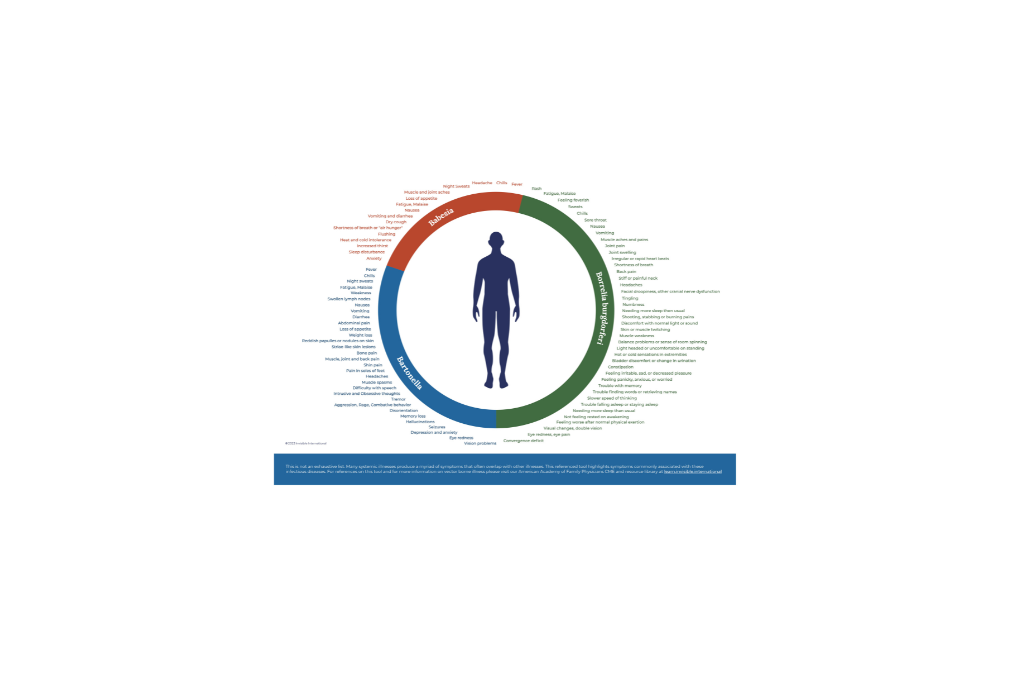
Printable Matrix & Validated Symptom Reference
Academic Tick-Borne Illness Research

PATIENT VOICES
The following are composite summaries of Lyme disease patient stories derived from two qualitative research studies conducted between 2020 and 2025 through Northern Arizona University and covered through IRB approval. Data presented here are anonymized to protect the identities of research participants, though reveal actual lived experiences related to challenges in Lyme disease diagnostics.
Emma’s path to an eventual Lyme disease diagnosis was, as she recalled, painfully fraught, complex, and long. Though she grew up in an area known to be endemic for Lyme disease, and remembers multiple tick bites and rashes as a child, her knowledge of the illness was limited. When she first started experiencing wide-ranging symptoms at 9 years old, her primary care physician dismissed them as “growing pains” after routine blood work proved inconclusive. Emma’s health further declined over the years, and she saw a total of 14 different providers before a family friend suggested the possibility of Lyme disease and recommended she see an infectious disease physician. An initial Lyme disease test showed antibodies, though without a definitive positive outcome, her infectious disease physician ruled out a Lyme disease diagnosis and referred her to another specialist. After several more years of declining health and a series of new providers, Emma consulted another infectious disease physician who ordered a two-tier diagnostic test, which came back positive for Lyme disease. From the time Emma first experienced symptoms to an eventual positive Lyme disease test, she had spent 18 years searching for answers while her symptoms, and quality of life, progressively worsened.
Illyssa was in her mid-teens when she first experienced joint pain and fatigue severe enough she was forced to leave high school and remained housebound as she passed through several providers seeking a definitive diagnosis and effective treatment. Ilyssa had no prior knowledge of Lyme disease and had no memory of having been exposed to ticks, though she spent considerable time outside as a child in a densely wooded area of the Midwest. Initial diagnoses of fibromyalgia, juvenile rheumatoid arthritis, and chronic fatigue syndrome offered temporary hope for a path forward, though as her health worsened and treatments proved ineffective, her search for answers continued. Ilyssa eventually found a physician knowledgeable in tickborne illness who questioned her previous diagnoses and recommended she take a two-tier test. Ilyssa remembers that her first three tests were negative, though recalls her physician suggesting that standard Lyme disease testing lacks appropriate sensitivity and can, in some cases, produce false negatives. Her physician encouraged Ilyssa to retest, which led to a positive result confirming a Lyme disease diagnosis that supported her physician’s initial clinical assessment.
Phoebe had led a highly active life until a tick bite after a hike led to a dramatic change in her ability to function as she once had. Following the onset of symptoms, her primary care provider ran standard bloodwork though, with little definitive insights into what was causing progressive neurological decline, referred Phoebe to a neurologist who raised the possibility of Multiple Sclerosis. Though her primary care provider had been made aware of a tick bite and the appearance of symptoms not long after, Phoebe recalls that the prospect of Lyme disease had never been raised. After an inconclusive MRI, Phoebe spent considerable time researching on her own, eventually suspecting Lyme disease as the root cause of her symptoms. She returned to her primary care provider to ask for a Lyme disease test, though an initial ELISA test came back negative. Phoebe saw three more providers before retesting with one and ordering bloodwork through a specialty lab with another. At this point, Phoebe recalls a two-tier test returning positive by CDC standards for Lyme disease, though her provider at the time said he did not know how to interpret the results in light of her past negative results, and was unwilling to treat her for Lyme disease. Phoebe believes the medical uncertainty surrounding her symptoms and delay in testing and treatment has led to longstanding complications that continue to shape and limit her day-to-day life.
Scott was a lifelong resident of an area endemic for Lyme disease and knew several friends and family members who had contracted it over the years. He recalls being aware of the risks of infection and followed appropriate preventative protocols when outdoors and in areas where tick exposure was likely. After experiencing a bout of flu-like symptoms, swollen and stiff joints, and rashes during a summer spent largely outdoors, Scott suspected exposure and made an appointment with a family medicine doctor to have what he believed would be a straightforward Lyme disease test. When initial testing returned negative, and his provider decided against offering treatment, Scott felt forced to seek additional care given his belief that his symptoms were directly tied to his exposure to ticks. Scott recalls having a follow-up two-tiered test with another provider, which showed an equivocal first part result and a negative second part. This provider again suggested it was unlikely to be Lyme disease leading Scott to continue to pursue help. A third Lyme disease test with a new provider revealed a positive first result, which Scott recalls, was enough for this provider to suspect Lyme disease and offer treatment. The path to an eventual diagnosis and the initiation of treatment for Lyme disease took over a year, which Scott alleges caused significant setbacks in his recovery.
Greg, an avid outdoorsman who had cursory knowledge of Lyme disease but lived in a region where he believed Lyme disease was rare, faced an unexpectedly arduous path to an eventual Lyme disease diagnosis. Initial perplexing symptoms led him to a provider who ordered a Lyme disease test after Greg’s urging, which came back positive. Told that the result was a “false positive” given the unlikely chance of having contracted Lyme disease in his region, Greg’s provider opted not to provide treatment for Lyme disease and referred Greg to a rheumatologist. Greg recalls having let go of the possibility of Lyme disease as he believed his provider, though a later encounter with a family medicine doctor who suspected Lyme disease after her clinical assessment, led him to agree to retest. His second test revealed an additional positive result for Lyme disease, and given the constellation of symptoms he had along with his provider’s clinical review, he soon began treatment for Lyme disease. Greg believes had he not had the benefit of seeing an additional provider who was knowledgeable in tickborne illness, he may have deteriorated further.
This project was driven by the lived experiences of each team member, and the following Lyme disease patient stories belong to them.
I was living in South Florida when I developed symptoms of fatigue, joint pain, and gradually increasing neurological involvement. After eliminating other possibilities, my primary care physician suspected Lyme disease, although serological testing was equivocal, and referred me to a neurologist for a spinal tap. Despite my CSF testing positive for Lyme antibodies, the neurologist did not believe that I had neuroborreliosis and failed to provide the recommended treatment. Oral doxycycline proved ineffective for my worsening symptoms and suppressed my antibodies on numerous follow-up tests. I finally presented CDC positive Lyme serology after discontinuing the antibiotics. It was only three years later that I received IV ceftriaxone for neurological Lyme disease, which resolved a significant subset of my symptoms. However, the multiple years of disseminated infection had left me disabled from permanent damage and secondary neurological diseases that require ongoing IVIG infusions.
I grew up in a region in New York known for Lyme disease and had multiple tick bites as a child. Both of my parents had Lyme disease, though my initial onset of symptoms at 13 years old presented in distinctly different ways, which led to years of misdiagnosis and delayed treatment. Progressively worsening neurological symptoms were disabling enough that after nearly twenty years of seeking a definitive diagnosis through dozens of providers, I was left bedridden, unable to work, and dependent on disability benefits. At 32, I was referred to an infectious disease doctor who tested for Lyme disease through a two-tiered test and my initial results were equivocal. I later tested positive for Lyme disease and several co-infections through a specialty lab and began treatment with a Lyme-literate physician. Given my delayed diagnosis, I have persistent neurological and cardiac complications that have required ongoing care.
PUBLISHED CASE STUDIES
The case studies below are examples of how Lyme disease can present despite various testing outcomes.
Guillain-Barré Syndrome as the Initial Manifestation of Lyme Disease: Diagnostic Challenges - PMC
A 61 year old woman presented with neurological symptoms typical for GBS and even tested positive for relevant biomarkers. She was placed on IVIG therapy for treatment, but Lyme testing was only considered when deteriorating symptoms presented as Bell’s palsy. Lyme was confirmed by positive serology and all symptoms were resolved soon after completing a 30 day course of IV ceftriaxone.
A Case of Disseminated Lyme Disease Presenting as Chronic Urticaria - PMC
A 49 year old male who worked outdoors as a city inspector in South Florida presented with 5 years of recurring rashes and was treated by dermatologists. Only when symptoms progressed to neuropathy in the hands and feet was Lyme testing considered as part of a differential diagnosis. The tests were CDC positive and the patient was subsequently treated with both oral and IV antibiotics.
Early Disseminated Lyme Disease Masquerading as Mononucleosis: A Case Report - PubMed
A young male developed flu-like symptoms 4 weeks after hiking in upstate New York. A false positive test for Epstein-Barr Virus initially. resulted in a misdiagnosis. As the patient developed hip pain, Bell’s palsy, and severe atrioventricular block, the diagnosis quickly shifted to disseminated Lyme disease and Lyme carditis, which was confirmed by serological testing.
Lyme neuroborreliosis as a cause of sudden sensorineural hearing loss and facial palsy - PMC
A woman in her 40s presented with sudden hearing loss with no clear cause. While under observation, she also developed Bell’s palsy, which led to suspicion of neurological Lyme disease. Although both her serological test and spinal tap were negative, the clinical diagnosis resulted in treatment with IV ceftriaxone, resolving all her symptoms completely by the one month follow-up visit after hospital discharge.
LYMEX - THE FUTURE OF TESTING
The Lyme Innovation Accelerator (LymeX), a partnership between the U.S. Department of Health and Human Services (HHS) and the Steven & Alexandra Cohen Foundation, is the world’s largest public-private partnership for Lyme disease.
LymeX Diagnostics
The goal of the LymeX Diagnostics Prize is to accelerate the development of diagnostics that can accurately detect active Lyme disease infections in people. The competition has reached Phase 4 with six teams remaining and continuing to advance toward FDA review in 2027.
Get to Know the Phase 4 Finalists:
BlueArc Biosciences has developed a molecular blood test for direct detection of early B. burgdorferi infection using standard diagnostic laboratory equipment. The assay is designed to identify infection during the acute phase and is particularly valuable for patients who test negative by current FDA-approved serological methods.
The GlycoLyme test has completed CDC premarketing evaluation and met equivalence requirements. A retrospective study is now underway using longitudinal samples collected over one year post-diagnosis to evaluate whether GlycoLyme can assess the risk of developing Post-Treatment Lyme Disease Syndrome (PTLDS).
HelixBind is conducting verification and validation of RaPID/LD, its proprietary direct-from-blood molecular assay for detecting Borrelia spirochetes associated with early Lyme disease, built on a workflow optimized for sensitivity in low single digit cells/mL range.
Galaxy Diagnostics has licensed Dr. Brandon Jutras’ Borrelia peptidoglycan research, combining the two teams that were pursuing urine based testing. The partnership unites Dr. Jutras’ proprietary antigen technology with Galaxy’s urine-based direct detection platform, enabling the detection of unique B. burgdorferi biomarkers.
The MGH team is continuing to develop a plasma and extracellular fluid test for sensitive detection of low-abundance nucleic acid from tick-borne pathogens.
GNOMX is continuing to develop a high-sensitivity epigenetic blood test that detects host-response markers to identify active Lyme disease infection.